

 AI-generated
 AI-generated
 AI-generated
Foosball passing: the wall pass and the lane pass
Contents
Midfield decides who gets to shoot. Two passes take the ball from the 5-bar to the 3-bar: the wall pass along the side wall and the lane pass diagonally into the field.
Both start with the same movement, so the other side only sees late which pass is coming. Learn the wall pass first, then the lane pass, and switch between the two in a game.
Wall pass: safely from midfield to your strikers
When you have the ball in midfield, you want to get it forward. The wall pass is the safe way to do it: you move the ball along the 5-bar to the side wall and play it along the wall to your 3-bar. There you pin it and you are in position to shoot.
Why the wall pass works
- It leaves the other side the smallest gap. Along the wall they can only block from one side.
- You reach your strikers with control instead of just smashing the ball forward.
- Together with the lane pass you have two options. Then the other side has to guess.
3 steps to the wall pass
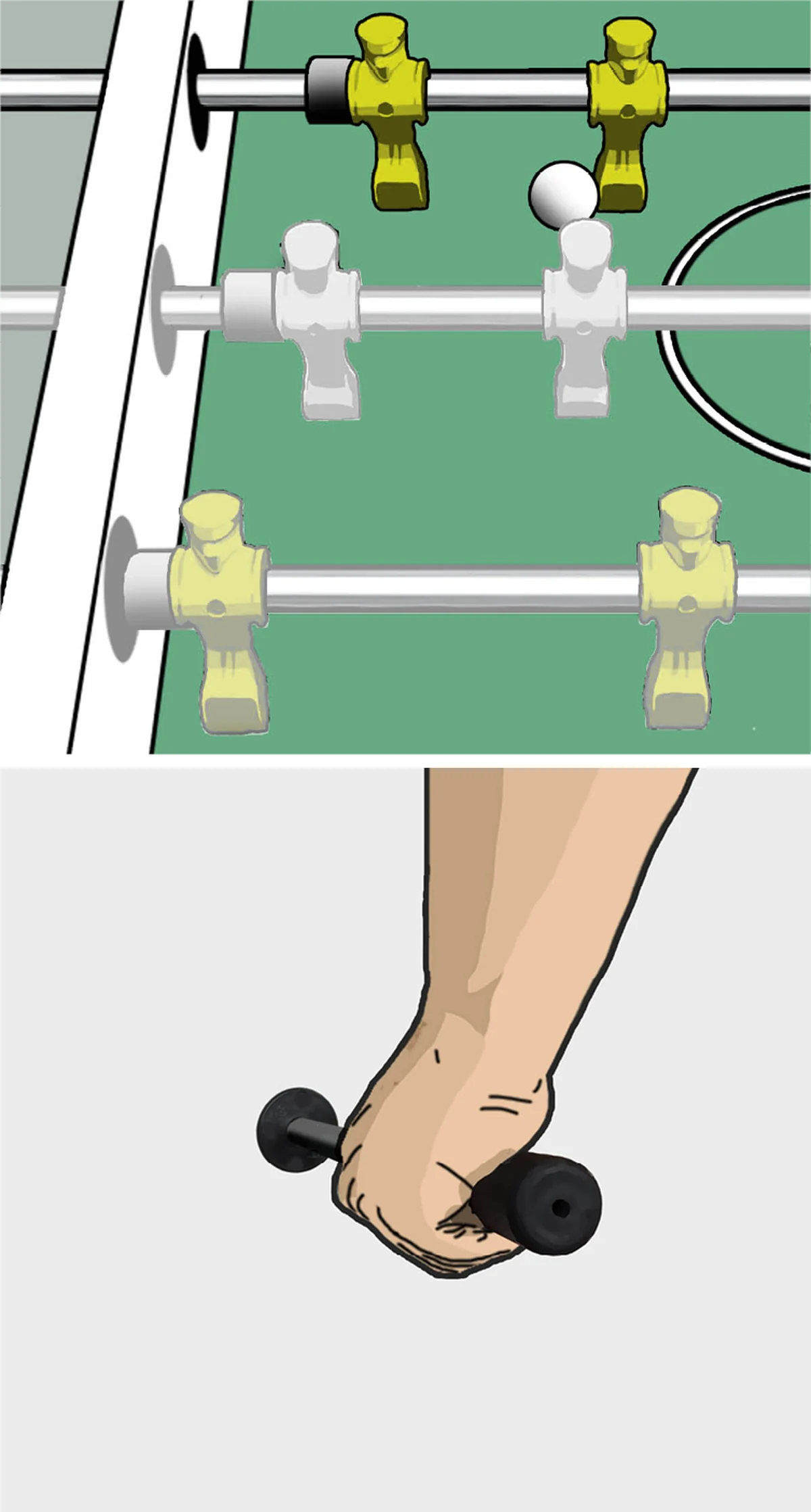
Step 1: Set the ball, get your strikers ready
Put the ball next to the second figure of your 5-bar. Lift the figures of your 3-bar slightly, just far enough that the ball can still stop underneath them later.
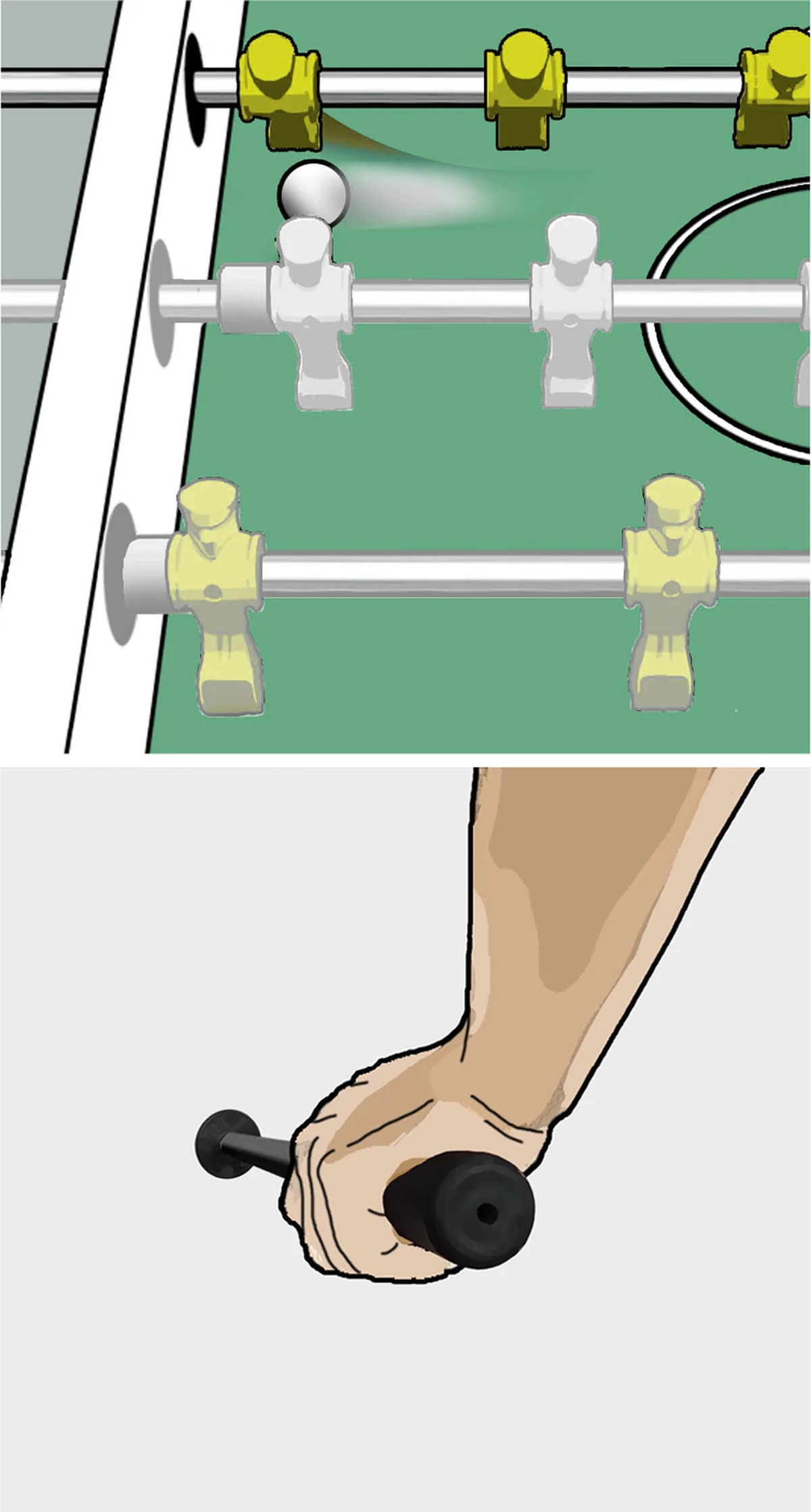
Step 2: Draw the ball to the wall
Move the 5-bar towards the side wall. Lift your figures as you go so the ball can run right up to the wall.
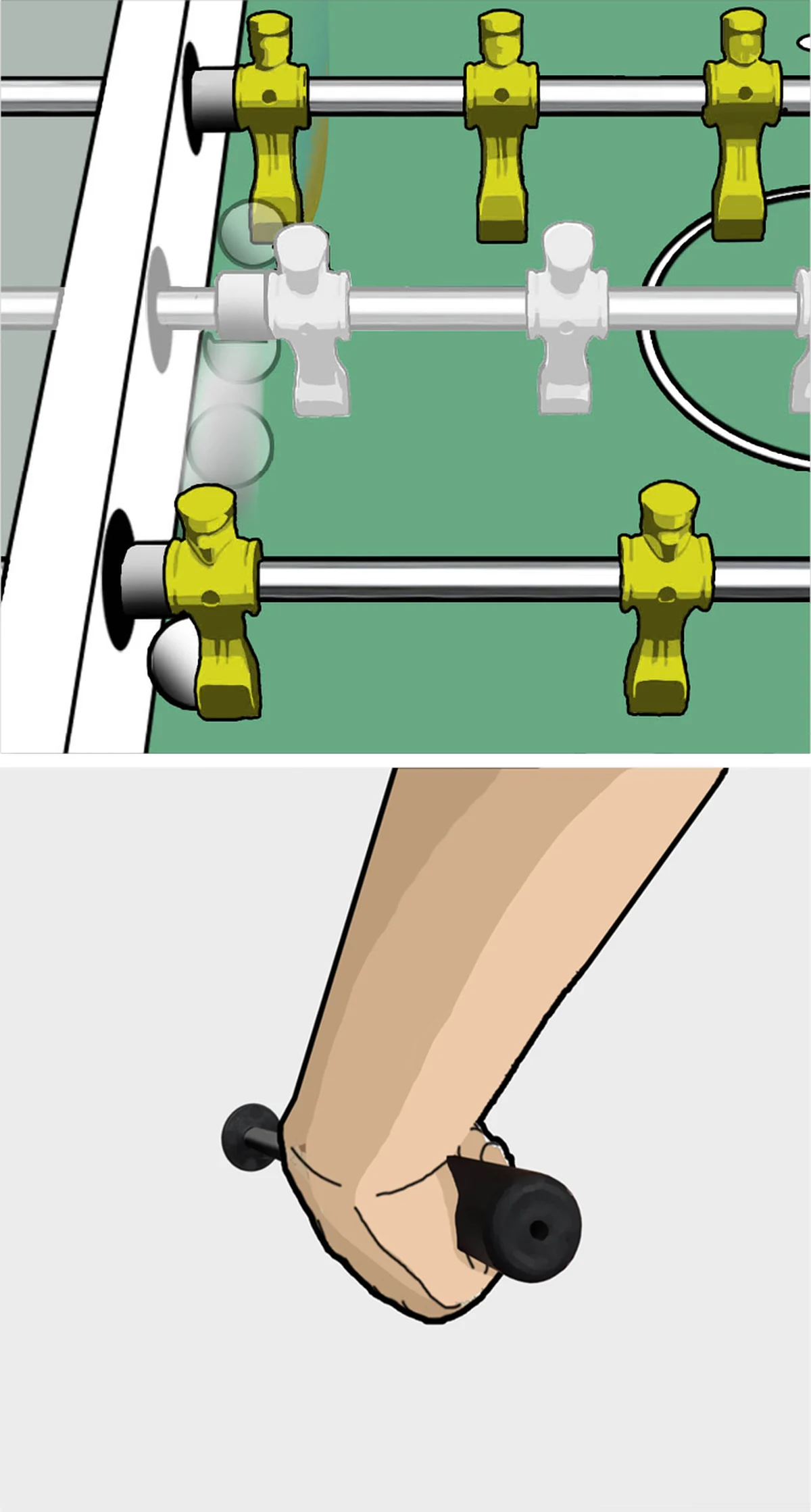
Step 3: Pass along the wall
As soon as the ball reaches the wall, tip the figures forward and play the ball forward along the wall. Your 3-bar waits by the wall and pins the ball.
Common wall pass mistakes
- The ball is at rest before you pass. A stopped ball on the 5-bar may not be played straight forward (see the rules below).
- The 3-bar is tilted too far or too flat. The ball bounces off or rolls straight through.
- You glance at the wall before you pass. The other side reads your eyes too.
- You always pass at the same speed. Then the other side adjusts to it.
Tip for advanced players: Wall pass
Once you catch the pass reliably, raise the pace bit by bit. The pass only becomes hard to defend when it is faster than the other player can react.
Lunch-break drill: Wall pass in 5 minutes
- 1 minute: Steps 1 and 2 only. Draw the ball to the wall, stop, go back.
- 2 minutes: Ten wall passes with nobody opposite. Count how many your 3-bar pins cleanly.
- 2 minutes: A colleague defends with their 5-bar. Five passes, then swap. Whoever gets more through wins.
Lane pass: the diagonal pass into the field
The lane pass starts just like the wall pass. But instead of running along the wall, the ball is clipped with the edge of the figure and runs diagonally into the field. Because you only brush the ball, some players call it a brush pass. For the other side the start looks the same. They cannot tell whether the ball is coming along the wall or through the middle.
Why the lane pass works
- It is your answer when the other side shuts the wall.
- It makes your wall pass stronger. Two options from the same starting position are hard to defend.
- You learn to hit the ball with only half the figure. That helps you with shots later on.
3 steps to the lane pass
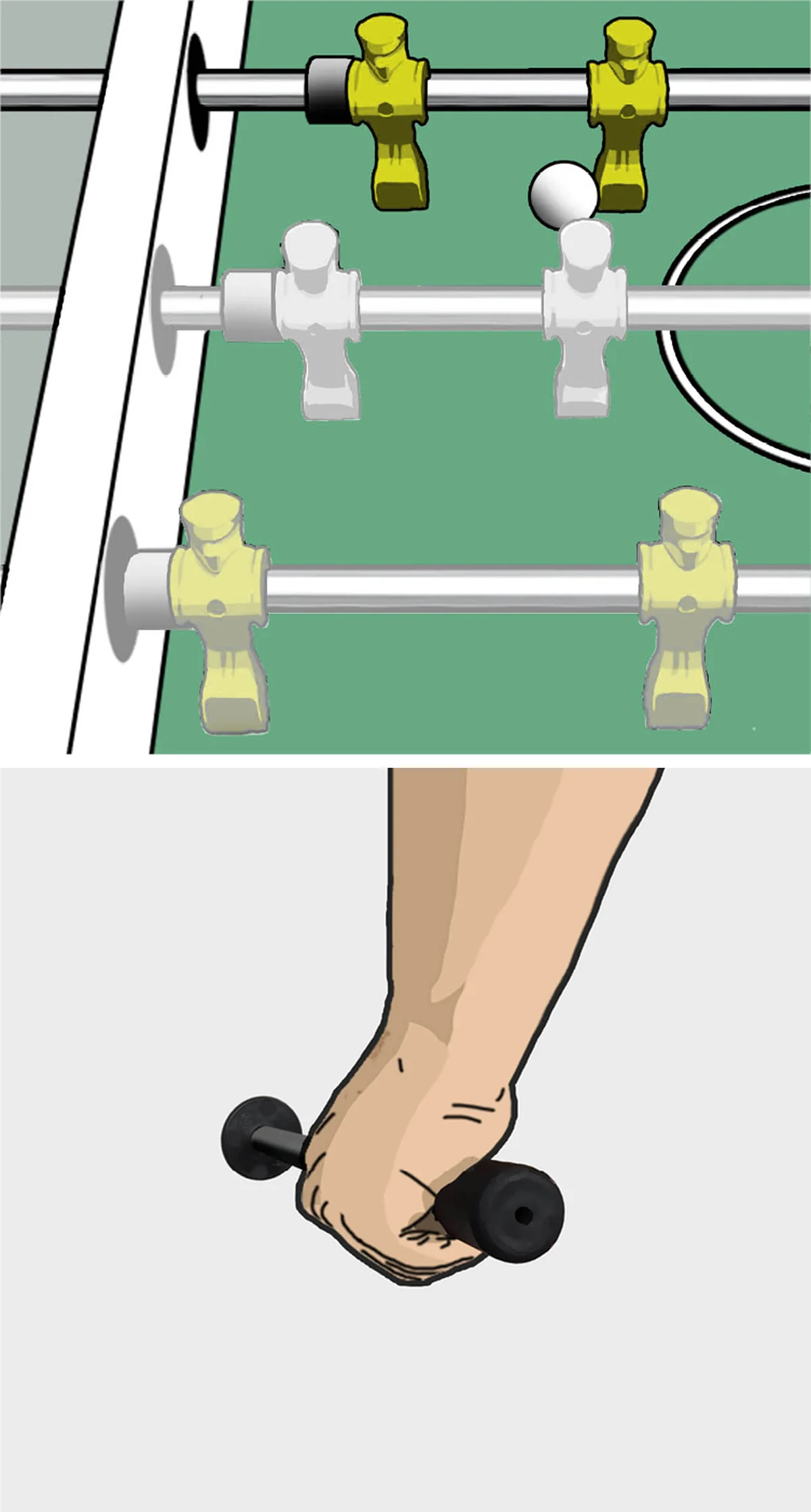
Step 1: Set the ball, get your strikers ready
Put the ball next to the second figure of your 5-bar. Tilt the figures of your 3-bar slightly forward. The ball still needs to be able to stop underneath them.
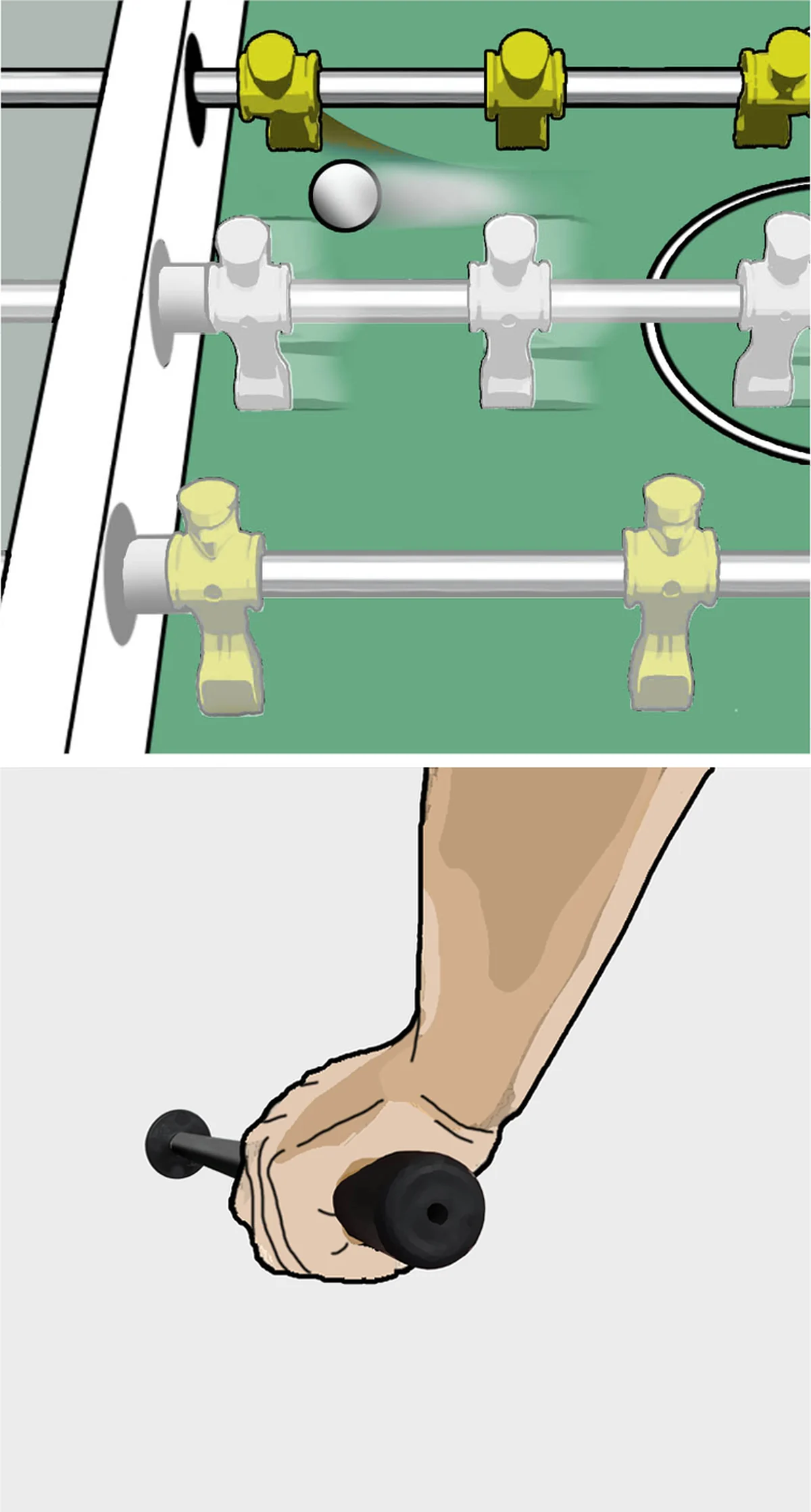
Step 2: Draw towards the wall, move your strikers into the field
Move the 5-bar towards the side wall and tilt the figures slightly back. Slide your 3-bar about 20 cm (8 inches) into the field. Keep the angle of the figures the same.
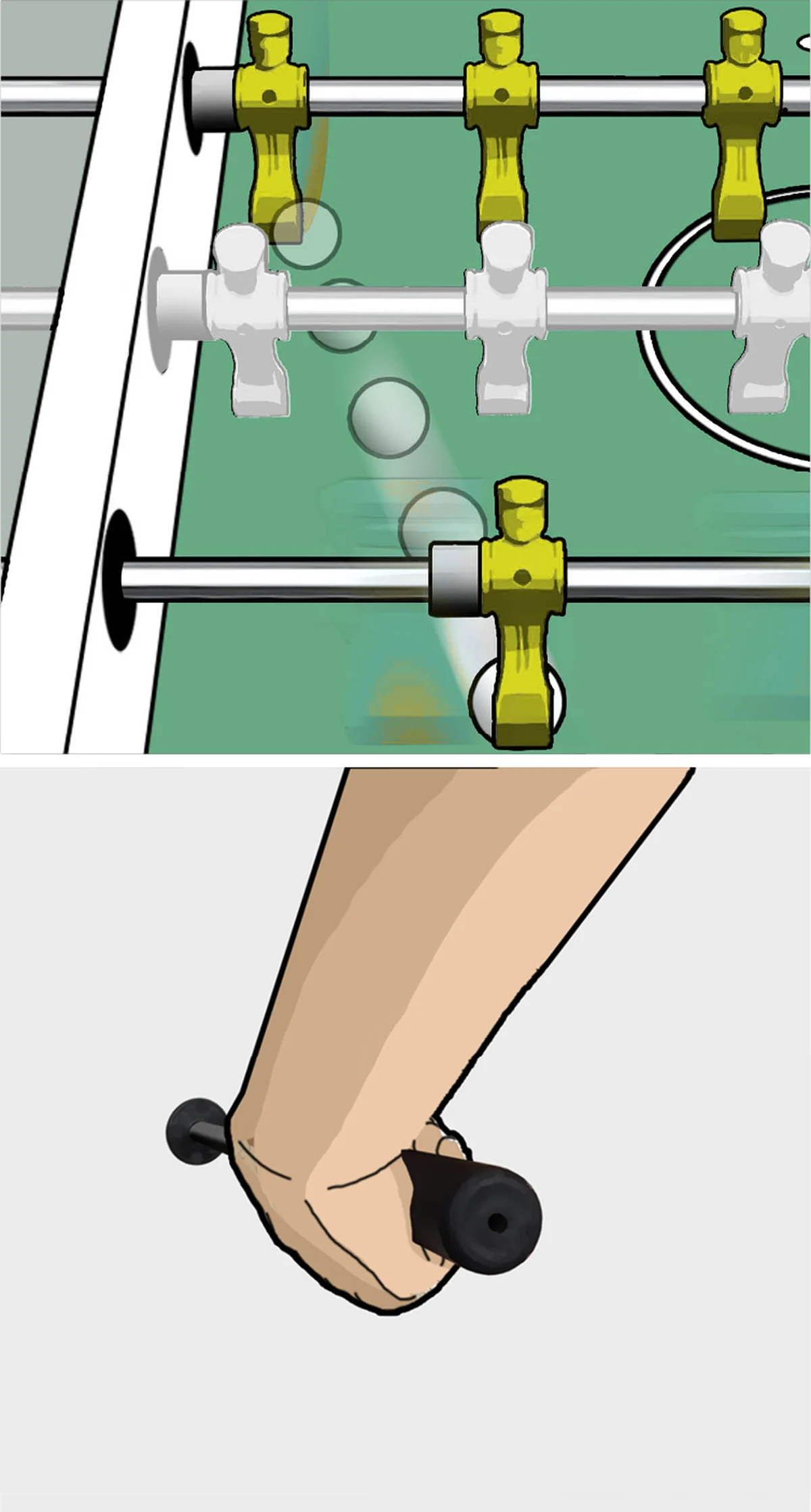
Step 3: Play it with the edge
Tip the figures forward before the ball touches the wall. Catch the ball with the edge of the figure so you only hit half of it. The ball runs diagonally forward to your 3-bar.
Common lane pass mistakes
- You hit the ball full on. It then runs straight, not diagonally. Only the edge should touch it.
- The ball already touches the wall. Then your lane pass turns into a botched wall pass.
- Your 3-bar moves into the field too early. The other side sees what is coming.
- You only ever play the lane pass. It only works when you mix it with the wall pass.
Tip for advanced players: Lane pass
Move your 3-bar away from the wall only at the moment you play the pass. Until then everything looks like a wall pass. That way the other side can no longer tell where the ball is going.
Lunch-break drill: Lane pass in 5 minutes
- 1 minute: Practise the edge only. Leave the ball still and clip half of it with the edge of the foot. Watch how sharply it angles.
- 2 minutes: Ten lane passes with nobody opposite. Count how many your 3-bar catches.
- 2 minutes: With an opponent: alternate wall pass and lane pass. Your opponent has to call which one they expect.
What the rules say
Two of the ITSF standard rules apply directly to the wall pass:
- No pass from a dead ball: A ball that has been stopped, pinned or set up on the 5-bar may not be passed forward to the 3-bar. It has to be moving again first, for example after you play it on to another figure (section 11 "Passing").
- Two wall touches at most: On the 5-bar the ball may touch the same wall no more than twice. Touching the other wall resets the count (section 12 "Wall Contact").
Both rules apply to the wall pass and the lane pass alike.
Challenge your colleagues
Midfield decides who gets to shoot up front. Set up a free league for your office in packeroo, log your games and find out who on your team owns the midfield.